
In the fast-moving world of digital marketing, choosing the best digital marketing strategy for higher ROI can be challenging. Among the many approaches, two standout contenders are Search Engine Optimization (SEO) and Paid Advertising (PPC). Both offer unique advantages, but when it comes to return on investment (ROI), businesses often ask: which one truly delivers more value over time?
Understanding the Basics
Before diving into ROI, let’s understand what each strategy entails.
It’s all about fine-tuning your site’s content, structure, and trust signals to rank higher on Google—without paying for ads. It’s a long-term approach that involves keyword research, on-page optimization, backlink building, and regular content updates.
On the other hand, Paid Advertising, such as Google Ads or social media ads, allows businesses to place their offerings directly in front of targeted users. These campaigns are immediate, measurable, and budget-controlled—but they come at a direct cost.
The ROI Equation: What Really Matters?
Simply put, ROI measures how much you earned versus how much you spent on your digital campaigns. While both SEO and PPC can be part of the best digital marketing strategy for higher ROI, their timelines and returns differ significantly.
SEO: Long-Term Gains
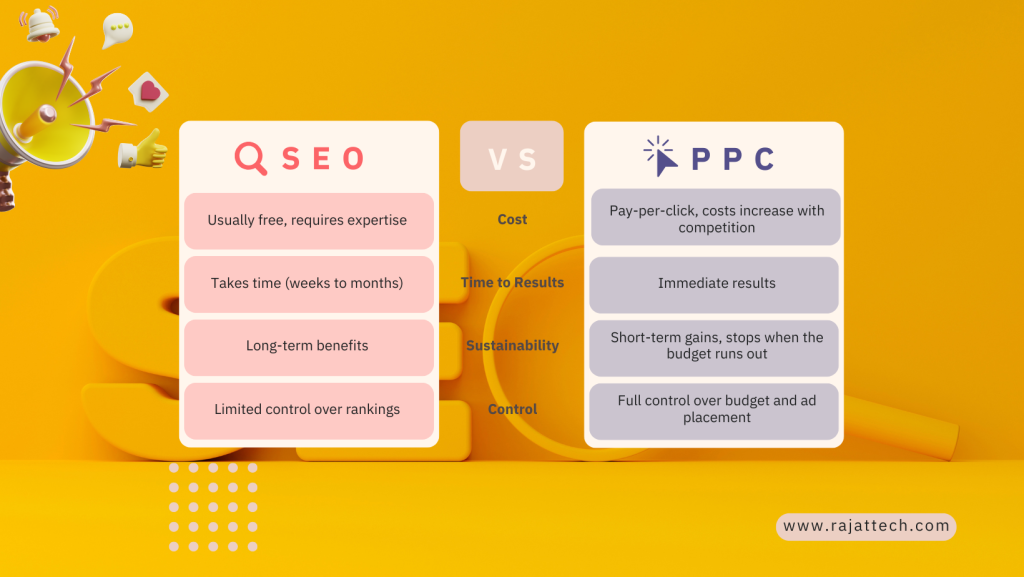
Investing in SEO might not give you instant gratification, but its long-term benefits are undeniable. Once your content ranks well, it continues to bring in traffic without additional ad spend. SEO builds authority and trust, especially with Google’s evolving algorithms favoring high-quality content and user experience.
For small and medium businesses, SEO often becomes the best digital marketing strategy for higher ROI because of its sustainable nature. You’re not paying for every click; rather, your investment lies in strategic content creation and optimization.
Paid Advertising Gets You Seen Fast, But It’ll Cost You
If you’re launching a new product or want immediate traffic, paid ads are hard to beat. Platforms like Google Ads offer robust targeting, measurable metrics, and instant visibility. However, in high-demand industries, ad spending can get expensive fast.
The downside?As soon as the campaign ends, the flow of visitors often dries up. Unlike SEO, PPC doesn’t compound over time. While it can be part of the best digital marketing strategy for higher ROI in short-term goals, relying solely on it may not be cost-effective in the long run.
Cost Comparison: SEO vs. PPC
Let’s break it down:
- SEO Costs: Typically involve hiring content creators, SEO specialists, and tools like SEMrush or Ahrefs. While the upfront cost is substantial, the long-term ROI can be much higher, especially as your content ages well and keeps ranking.
- PPC means paying for clicks, not guaranteed results. The cost-per-click (CPC) can vary widely depending on the industry and competition. While it’s easier to control budget, the returns can diminish quickly without expert management.
For many businesses, combining both strategies is actually the best digital marketing strategy for higher ROI—SEO builds a strong foundation, while PPC fills in the gaps and drives targeted traffic during specific campaigns.
Data Speaks: What Do the Numbers Say?
Studies show that SEO leads have a 14.6% close rate, compared to just 1.7% for outbound methods like cold calling or direct mail. Meanwhile, Google Ads report an average ROI of 200%—which means $2 for every $1 spent—but only when campaigns are well-optimized.
However, organic traffic often delivers better lifetime value because it attracts users with genuine search intent. For that reason, companies that focus on SEO as part of their plan often find it to be the best digital marketing strategy for higher ROI in the long haul.
When to Choose One Over the Other
Choose SEO when:
- You want sustainable, long-term traffic.
- You’re building a brand presence and authority.
- You’re on a tighter budget and can wait for results.
Choose PPC when:
- You need quick visibility (e.g., product launches, promotions).
- You can adjust your budget anytime and track your ROI in real-time
- You’re targeting a specific audience segment for a limited time.
Understanding your business goals helps in choosing the best digital marketing strategy for higher ROI that fits your current needs.
The Hybrid Approach: Power in Combination
Many successful brands today don’t choose one over the other—they combine both. SEO helps them build evergreen content and online authority, while PPC brings in focused traffic for specific offers. Together, they form the best digital marketing strategy for higher ROI, blending stability with agility.
For example, running a Google Ads campaign on a high-converting landing page while optimizing that page for organic search can double your chances of success. The data from paid campaigns can also inform your SEO keyword strategy, creating a loop of continuous improvement.
Final Thoughts
So, SEO or Paid Advertising—what delivers better ROI?
The truth is, both have their place. If you’re after quick wins and can afford the spend, PPC is a powerful tool. But if your goal is to achieve long-term profitability and adaptability, combining both may be the best digital marketing strategy for higher ROI.