Admin

Build a Winning Digital Marketing Strategy—Step by Step

In today’s fast-moving digital world, a strong marketing plan isn’t optional—it’s a must for success. Whether you’re a business owner, a freelancer, or a marketing beginner, knowing how to create an effective strategy from zero can help you compete in today’s crowded market. This guide will walk you through practical steps to build a results-driven plan using the Best digital marketing strategies in 2025. 1. Set Clear Goals Before you do anything, decide what you want to achieve. Setting SMART goals (Specific, Measurable, Achievable, Relevant, Time-bound) helps guide your actions. When your goals are well-defined, it’s easier to apply the Best digital marketing strategies in 2025 that align with your objectives. 2. Know Your Target Audience Every successful marketing plan starts with understanding your audience. Take time to research: Knowing your audience allows you to create campaigns that drive stronger engagement. It also ensures that the Best digital marketing strategies in 2025 are not wasted on the wrong people. 3. Analyze Your Competitors Competitor analysis helps you see what’s working for others in your niche. Look at: By studying competitors, you can adopt proven ideas, improve on them, and create unique campaigns using the Best digital marketing strategies in 2025. 4. Choose the Right Digital Channels There are multiple platforms and tools available, but you don’t need to be everywhere. Common channels include: The key is to select channels that fit your audience and goals, allowing you to focus your energy on the Best digital marketing strategies in 2025. 5. Create High-Value Content Content is the heart of digital marketing. Without it, your marketing efforts will fall flat. Consider creating: High-quality content not only attracts visitors but also keeps them engaged—one of the Best digital marketing strategies in 2025 for long-term growth. 6. Optimize for SEO Search Engine Optimization ensures your content appears when people search for related topics. By mastering SEO, you’ll leverage one of the Best digital marketing strategies in 2025 to drive consistent, free traffic to your website. 7. Track and Measure Results Without tracking, your plan drifts like a ship with no compass. Use tools like Google Analytics, Search Console, and social media insights to measure performance. By reviewing data regularly, you can fine-tune the Best digital marketing strategies in 2025 for maximum impact. 8. Stay Flexible and Adapt The digital landscape changes fast—new tools, trends, and algorithms appear every year. The strategies that worked last year may not work now. Adapting quickly ensures you continue using the Best digital marketing strategies in 2025 effectively. Final Thoughts Building a digital marketing plan from scratch may seem overwhelming, yet breaking it down keeps it simple. Set realistic goals, know your audience, research your competitors, choose the right channels, and create valuable content.Continuously optimize for SEO, measure your results, and stay agile with market changes. By following these steps, you’ll be equipped to use the Best digital marketing strategies in 2025 to grow your business, build your brand, and achieve lasting success in the online world.

Build a Winning Digital Marketing Strategy—Step by Step Read More »
The Future of Digital Marketing with AI: Opportunities and Obstacles

The digital marketing landscape is evolving faster than ever, and one of the most powerful forces driving this change is Artificial Intelligence (AI).From delivering personalized content recommendations to enabling predictive analytics and automating customer service, AI is revolutionizing the way marketers engage with consumers. But while the potential is huge, so are the challenges. To stay ahead of the curve, marketers are now exploring and integrating the best AI tools for digital marketing, which help improve efficiency, customer engagement, and overall campaign performance. This blog explores the major opportunities and challenges AI introduces to digital marketing—and how leveraging the right tools can significantly enhance your strategy. AI Opportunities in Digital Marketing 1. Personalization at Scale Consumers expect personalized experiences. AI allows marketers to analyze massive amounts of customer data and deliver tailored content in real time. Whether it’s personalized emails, product suggestions, or dynamic website content, AI helps marketers scale personalization without manual input. Tools like ChatGPT, Jasper AI, and Phrasee are considered some of the best AI tools for digital marketing because they help craft personalized content that speaks directly to individual user needs and behavior. 2. Predictive Analytics AI leverages previous behavioral patterns to anticipate what users will do next. With predictive analytics, businesses can forecast trends, customer churn, or sales patterns, helping them make smarter decisions. This is especially useful in performance marketing and e-commerce. Platforms that integrate machine learning for prediction—like HubSpot, Salesforce Einstein, and Google Analytics AI—are among the best AI tools for digital marketing due to their ability to help marketers act proactively rather than reactively. 3. Automated Customer Support AI-powered chatbots and virtual assistants provide 24/7 customer service, reducing the need for large support teams. These tools can handle frequently asked questions, recommend products, and even resolve issues in real time. Tools like Intercom, Drift, and ManyChat are now considered among the best AI tools for digital marketing because they improve customer satisfaction while cutting operational costs. Challenges of AI in Digital Marketing While AI opens new doors, it also comes with a set of challenges marketers must address. 1. Data Privacy and Ethics As AI systems collect and process vast amounts of user data, privacy becomes a major concern. With stricter regulations like GDPR and India’s Digital Personal Data Protection Act, marketers must ensure ethical data handling and full transparency. Even when using the best AI tools for digital marketing, one must be aware of compliance obligations and implement strict privacy policies. 2. Lack of Human Touch AI can analyze and automate, but it lacks emotional intelligence. While AI-generated content offers efficiency, it can sometimes feel robotic or lack emotional depth. Brands that over-rely on automation risk losing the personal connection that fosters customer loyalty. This is why even the best AI tools for digital marketing should be used to assist—not replace—human creativity and emotional insight. 3. Technical Complexity Implementing AI solutions isn’t always simple. It often requires technical knowledge, integrations, and a learning curve for teams unfamiliar with the technology. Small businesses may find it challenging to choose or afford the right tools. That said, many of the best AI tools for digital marketing now offer beginner-friendly interfaces and drag-and-drop automation builders to help non-tech-savvy marketers get started. Use Cases of AI in Digital Marketing Let’s explore how AI is being applied across various channels: Platforms like SEMrush, Copy.ai, SurferSEO, and Adzooma are frequently listed among the best AI tools for digital marketing because they automate and optimize these use cases effectively. How to Choose the Right AI Tool Selecting the best AI tools for digital marketing depends largely on your specific goals and business needs: Start small, test different platforms, and choose one that fits your needs and budget. Make sure the tool integrates easily with your existing software stack. Final Thoughts AI is no longer just a futuristic concept—it’s an essential part of the modern digital marketer’s toolkit. From saving time to delivering hyper-personalized experiences, AI offers countless opportunities to grow your brand and engage your audience. However, it’s crucial to strike a balance. Though AI streamlines many tasks, the value of human creativity, emotional connection, and strategic vision cannot be replaced. The key lies in combining both.

The Future of Digital Marketing with AI: Opportunities and Obstacles Read More »

Email Marketing Strategies That Actually Convert

In the ever-evolving digital landscape, email marketing remains one of the most effective tools for building relationships, driving traffic, and converting leads into loyal customers. Yet, despite its potential, many beginners struggle to achieve meaningful results. What makes a campaign truly convert? It starts with following the best email marketing strategy for beginners—a blend of clarity, consistency, personalization, and data-driven actions. Whether you’re just starting your journey or trying to refine your approach, this blog will walk you through actionable strategies that deliver real conversions. 1. Build a Quality Email List—Don’t Buy One Building a strong email list is essential for driving consistent marketing results. Instead of buying email addresses (which often results in low engagement and spam reports), focus on organic list-building methods like lead magnets, opt-in forms, and gated content. The best email marketing strategy for beginners always includes ethical list-building, ensuring that your audience truly wants to hear from you. Maintaining a clean and engaged email list leads to higher open rates and improved conversion results.     2. Write Clear, Compelling Subject Lines Subject lines are your first impression. If your subject line doesn’t spark curiosity or provide value, your email might never be opened. Incorporate emotional triggers, personalized messaging, and a sense of urgency to effectively capture your audience’s attention. Remember, the best email marketing strategy for beginners encourages simplicity over cleverness. Avoid clickbait—promise value and deliver on it inside the email. 3. Personalization Is More Than Just a Name Personalization goes beyond saying “Hi Rajat.” Segment your audience based on interests, past behavior, or demographics, and tailor your message accordingly. For example, sending product recommendations based on past purchases or location-based offers can significantly improve engagement. The best email marketing strategy for beginners focuses on meaningful personalization that feels human, not robotic. 4. Use a Clear Call-to-Action (CTA) Every email should include a clear next step—never leave your readers guessing. Whether you want them to read a blog, shop a sale, or download a guide—tell them clearly and confidently. The best email marketing strategy for beginners involves placing one strong CTA per email, usually in a button format, and repeating it at least once for visibility. CTAs like “Grab your free trial,” or “Start saving today” drive direct action. 5. Design Mobile-First Emails With over 60% of email opens happening on mobile, designing for smaller screens is no longer optional. That’s why your emails must be responsive, quick-loading, and easy to read on small screens. Using single-column layouts, short paragraphs, and large buttons are all part of the best email marketing strategy for beginners in today’s mobile-centric world.Make sure to test your emails across various screen sizes to catch any formatting issues. 6. A/B Test Everything Guesswork doesn’t work in email marketing. A/B testing your subject lines, content formats, CTA buttons, and send times helps you learn what resonates with your audience. The best email marketing strategy for beginners includes setting up simple tests like “Subject Line A vs. B” or “CTA on top vs. bottom” and tracking the results. Simple optimizations often have the biggest impact on conversion performance. 7. Keep It Consistent, But Not Spammy Consistency builds trust. Decide how often you want to send emails—weekly, biweekly, monthly—and stick to it. Avoid overwhelming your audience by flooding their inboxes, as it can lead to unsubscribes. The best email marketing strategy for beginners recommends creating a content calendar and sticking to a regular schedule. Over time, this helps you stay top-of-mind with your audience without becoming annoying. 8. Analyze, Learn, and Improve Conversion doesn’t happen overnight. Track metrics like open rates, click-through rates, bounce rates, and conversions to understand what’s working and what isn’t. The best email marketing strategy for beginners is one that evolves. Use your data to refine your strategy, test new ideas, and continuously improve your campaigns. Remember, every failure is an opportunity to learn what your audience truly wants. Bonus Tips: Tools & Platforms for Beginners All of these support the best email marketing strategy for beginners, allowing you to automate, analyze, and grow without overwhelming you with complexity. Final Thoughts Email marketing is not about sending random newsletters or promotions. Successful marketing is about starting conversations, delivering value, and earning your audience’s trust. So, whether you’re starting from zero or looking to level up, stick to the essentials: build a quality list, offer value, personalize your content, and always test and learn.

Email Marketing Strategies That Actually Convert Read More »

SEO vs. Paid Advertising: Which One Delivers Better ROI?

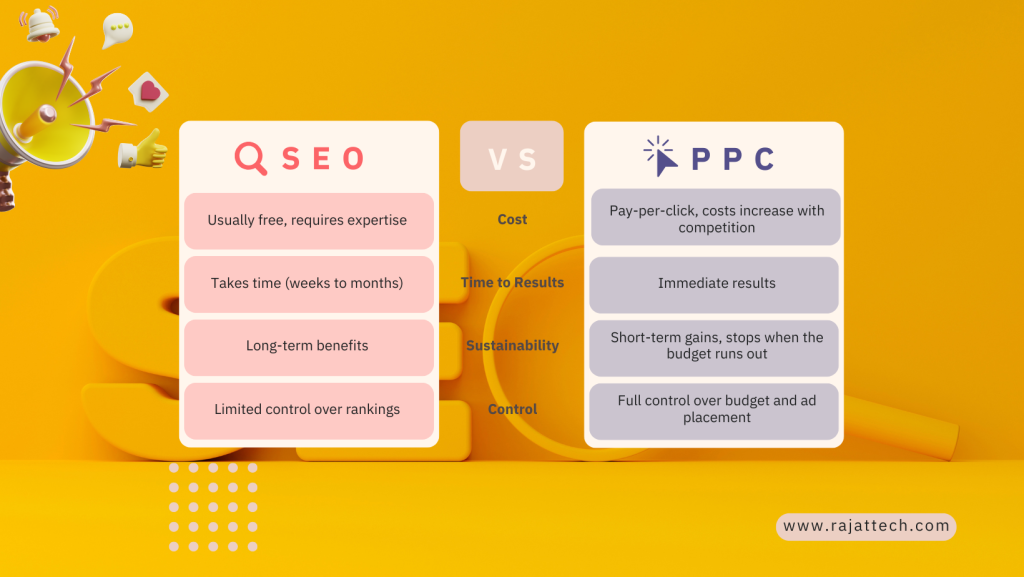
In the fast-moving world of digital marketing, choosing the best digital marketing strategy for higher ROI can be challenging. Among the many approaches, two standout contenders are Search Engine Optimization (SEO) and Paid Advertising (PPC). Both offer unique advantages, but when it comes to return on investment (ROI), businesses often ask: which one truly delivers more value over time? Understanding the Basics Before diving into ROI, let’s understand what each strategy entails. It’s all about fine-tuning your site’s content, structure, and trust signals to rank higher on Google—without paying for ads. It’s a long-term approach that involves keyword research, on-page optimization, backlink building, and regular content updates. On the other hand, Paid Advertising, such as Google Ads or social media ads, allows businesses to place their offerings directly in front of targeted users. These campaigns are immediate, measurable, and budget-controlled—but they come at a direct cost. The ROI Equation: What Really Matters? Simply put, ROI measures how much you earned versus how much you spent on your digital campaigns.  While both SEO and PPC can be part of the best digital marketing strategy for higher ROI, their timelines and returns differ significantly. SEO: Long-Term Gains Investing in SEO might not give you instant gratification, but its long-term benefits are undeniable. Once your content ranks well, it continues to bring in traffic without additional ad spend. SEO builds authority and trust, especially with Google’s evolving algorithms favoring high-quality content and user experience. For small and medium businesses, SEO often becomes the best digital marketing strategy for higher ROI because of its sustainable nature. You’re not paying for every click; rather, your investment lies in strategic content creation and optimization. Paid Advertising Gets You Seen Fast, But It’ll Cost You If you’re launching a new product or want immediate traffic, paid ads are hard to beat. Platforms like Google Ads offer robust targeting, measurable metrics, and instant visibility. However, in high-demand industries, ad spending can get expensive fast. The downside?As soon as the campaign ends, the flow of visitors often dries up. Unlike SEO, PPC doesn’t compound over time. While it can be part of the best digital marketing strategy for higher ROI in short-term goals, relying solely on it may not be cost-effective in the long run. Cost Comparison: SEO vs. PPC Let’s break it down: For many businesses, combining both strategies is actually the best digital marketing strategy for higher ROI—SEO builds a strong foundation, while PPC fills in the gaps and drives targeted traffic during specific campaigns. Data Speaks: What Do the Numbers Say? Studies show that SEO leads have a 14.6% close rate, compared to just 1.7% for outbound methods like cold calling or direct mail. Meanwhile, Google Ads report an average ROI of 200%—which means $2 for every $1 spent—but only when campaigns are well-optimized. However, organic traffic often delivers better lifetime value because it attracts users with genuine search intent. For that reason, companies that focus on SEO as part of their plan often find it to be the best digital marketing strategy for higher ROI in the long haul. When to Choose One Over the Other Choose SEO when: Choose PPC when: Understanding your business goals helps in choosing the best digital marketing strategy for higher ROI that fits your current needs. The Hybrid Approach: Power in Combination Many successful brands today don’t choose one over the other—they combine both. SEO helps them build evergreen content and online authority, while PPC brings in focused traffic for specific offers. Together, they form the best digital marketing strategy for higher ROI, blending stability with agility. For example, running a Google Ads campaign on a high-converting landing page while optimizing that page for organic search can double your chances of success. The data from paid campaigns can also inform your SEO keyword strategy, creating a loop of continuous improvement. Final Thoughts So, SEO or Paid Advertising—what delivers better ROI? The truth is, both have their place. If you’re after quick wins and can afford the spend, PPC is a powerful tool. But if your goal is to achieve long-term profitability and adaptability, combining both may be the best digital marketing strategy for higher ROI.

SEO vs. Paid Advertising: Which One Delivers Better ROI? Read More »

How Social Media Influencers Are Changing the Face of Digital Advertising

In the evolving world of digital marketing, one trend has emerged as both dominant and game-changing: the rise of social media influencers. These modern-day opinion leaders are not just content creators; they are powerful brand partners reshaping how businesses connect with consumers. From Instagram reels to YouTube vlogs, their influence is profound—and growing by the day. Among this revolution, top social media influencers in India 2025 are not just entertainers or lifestyle bloggers. They have become key drivers of digital advertising success, shaping consumer opinions and purchasing decisions at an unprecedented scale. The New Age of Advertising Traditional advertising relied heavily on mass media—TV, print, and radio. But as audiences shifted online, especially to social media platforms like Instagram, YouTube, and Twitter, the advertising strategy had to change. Enter influencer marketing. Influencer marketing has humanized advertising. Rather than flashy banners or disruptive commercials, people now trust recommendations from those they follow and admire. Especially when coming from the top social media influencers in India 2025, these endorsements often feel more authentic, personal, and credible. Why Influencers Work There’s a psychological edge to influencer marketing. It relies on trust and relatability. Audiences perceive influencers as “real people,” unlike actors in a commercial. Their lives, struggles, and successes are shared daily, making their product recommendations feel like advice from a friend. Moreover, influencers have highly targeted audiences. A fashion influencer from Mumbai may appeal to young urban women, while a fitness vlogger in Delhi might engage health-conscious youth. Brands use this segmentation to craft highly effective, ROI-driven campaigns—often with better engagement than traditional media. That’s why many brands, both local and global, are now strategically collaborating with the top social media influencers in India 2025 for everything from product launches to full-scale digital campaigns. The Data Behind the Influence According to a 2024 report by Influencer Marketing Hub, influencer marketing is projected to become a $24 billion industry by 2025. In India alone, influencer collaborations grew by 29% in the last year. Engagement rates with influencer content far outpace that of brand-created content, particularly in sectors like fashion, tech, food, and beauty. What’s more impressive is the audience loyalty. Followers often wait for product recommendations from their favorite influencers, especially the top social media influencers in India 2025, whose voice carries credibility built over years of consistent content. Micro-Influencers vs. Mega-Influencers Not all influencers have millions of followers. In fact, micro-influencers (with 10K–100K followers) often outperform mega-influencers in terms of engagement. Why? Because their niche following is highly engaged and specific. But when it comes to mass reach and brand prestige, businesses still turn to the top social media influencers in India 2025. Names like Prajakta Koli, Bhuvan Bam, Kusha Kapila, and Ranveer Allahbadia are among the frontrunners redefining how brands connect with the Gen Z and millennial demographic. Changing Consumer Behavior One of the most significant impacts of influencer marketing is its ability to shape consumer behavior. From skincare routines to tech gadgets and financial advice, consumers now actively seek guidance from their favorite creators. This shift has made digital advertising more interactive and community-driven. Consumers don’t just buy products—they engage in conversations, leave reviews, and share feedback. Influencers play the role of both brand ambassador and community manager, making them invaluable in the buyer journey. That’s why marketers are continuously studying the strategies of the top social media influencers in India 2025 to adapt their brand messaging and content formats. Influencer Marketing and ROI The biggest reason brands are investing in influencer marketing is measurable ROI. While traditional ads have fixed formats, influencer collaborations offer creative flexibility. Influencers can present products in everyday life scenarios, tutorials, or challenges, enhancing relatability. Campaigns involving the top social media influencers in India 2025 often show higher conversion rates, especially in e-commerce. Audiences trust their recommendations, swipe up links, or click bio links to purchase, all within a few seconds of viewing a story or video. In fact, influencer content is now a major traffic driver for many D2C brands in India. What Brands Should Consider While working with influencers has clear benefits, not every influencer is the right fit. Brands must focus on: More importantly, working with the top social media influencers in India 2025 requires thoughtful strategy. Many of them are choosy about partnerships and only endorse brands they personally use or believe in. The Future of Influencer Marketing As AI and analytics continue to shape digital advertising, influencer marketing will become more data-driven, but it will never lose its human element. By 2026, we may even see virtual influencers, advanced AR filters, and personalized content based on user preferences. Yet, the appeal of real-life creators—especially the top social media influencers in India 2025—will continue to dominate because of their emotional connection with audiences. Final Thoughts Social media influencers are not just digital creators—they are the new-age brand storytellers. Their ability to shape perceptions, drive engagement, and deliver results is why businesses across India are rethinking their advertising game.

How Social Media Influencers Are Changing the Face of Digital Advertising Read More »

Building Brand Trust Through the Voice of Content

In today’s crowded digital space, brands are constantly competing to be noticed. Consumers are overwhelmed with choices, making it harder than ever for companies to stand out. That’s where content marketing plays a powerful role—not just in attracting customers but in building trust and long-term brand authority. In simple terms, content is not just what you say; it’s how you make your audience believe you. Why Content Marketing Matters Before diving into how to build brand authority with content, let’s understand why content marketing is so effective. Traditional advertising shouts at people. Whether through blog posts, social media, videos, or eBooks, content builds a relationship with your audience by solving problems, educating, entertaining, or inspiring them. Customers no longer trust brands that only sell. They trust brands that educate, inform, and show expertise—without asking for anything in return first. That’s why content marketing stands out as the most genuine way to earn trust and authority online. 1. Consistency Builds Credibility One of the core answers to how to build brand authority with content is consistency. When you post high-quality content regularly, you send a message to your audience: “We’re here. We care. We know what we’re doing.” This can be weekly blog posts, daily Instagram updates, or monthly email newsletters. The format doesn’t matter as much as the frequency and value. Search engines also love consistency. Regular content helps your website rank higher in search results, putting your brand in front of more people. Over time, this consistent visibility translates into trust. 2. Provide Real Value Think about your favorite content online. It probably helped you solve a problem or gave you useful insights. That’s what authoritative content does. If you’re wondering how to build brand authority with content, start by focusing on solving your audience’s problems. For example, a digital marketing agency that posts weekly SEO tips, free tools, and how-to guides will naturally be seen as a thought leader. When it’s time for the reader to hire a marketing partner, that agency will be their first choice. It’s about making your brand the go-to option without hesitation. That only happens when people feel your content actually helps them. 3. Thought Leadership Through Original Insights If you’re repeating what everyone else is saying, you won’t stand out. Understanding how to grow your brand’s authority begins with embracing the role of a thought leader. This doesn’t mean you need to say something revolutionary. But you do need to add your unique perspective. Original research, industry trends, data-backed opinions, and expert interviews all add to your credibility. If your content reflects deep expertise and fresh insights, it positions your brand as a leader in the field, not just another player. 4. Create Multi-Format Content Some people prefer reading, others love watching videos, and many enjoy listening to podcasts. Knowing how to build brand authority with content means understanding your audience’s content consumption habits. For example, When your message is delivered in multiple formats across different channels, your brand appears more present, more credible, and more professional. 5. Leverage User-Generated Content Another underrated strategy for how to build brand authority with content is leveraging user-generated content (UGC). When your customers talk about your brand, post reviews, or share your products on social media, it creates social proof. Highlighting these stories in your content not only increases trust but shows that real people value your brand. Encourage your audience to create content for you—run contests, ask for testimonials, or feature customer stories.  6. Use Content to Humanize Your Brand People trust people, not logos. Brands that show the human side of their business build deeper connections. A great way to practice how to build brand authority with content is by showing behind-the-scenes moments, sharing employee stories, or even discussing failures and lessons. It brings your brand to life—making it feel authentic and leaving a lasting mark. And in a world of polished ads and fake reviews, authenticity is rare—and powerful. 7. Strong SEO and brand authority always grow together. You might wonder what SEO has to do with how to build brand authority with content. The answer? Everything. When your content ranks on the first page of Google, users automatically assume you are an expert. Effective SEO ensures your high-quality content gets seen. Focus on: SEO ensures your voice is heard, and content ensures your voice is trusted. Final Thoughts Building brand authority takes time. It’s not something you can achieve overnight with one viral post or campaign. Keep creating valuable content, and over time, your audience will see you as more than just a brand—they’ll see you as a voice they can trust. Remember: Content is not just about marketing. It’s about meaningful communication. And in the long run, meaning is what creates trust—and trust is what creates authority.

Building Brand Trust Through the Voice of Content Read More »